Your concrete is already watching you and nobody told your plant operator
The silent revolution under your tires
A road that whispers to its engineers. Not with words — with data streams that pulse with every turn of a wheel. That isn't science fiction anymore. It's happening right now on Indiana highways.
Researchers at Purdue University have built concrete that knows its own condition. It can tell you when it's strong enough to carry traffic. Better still, it screams for help before it cracks.
Most of us file concrete under "dead material." Heavy, grey, stubbornly silent — right up until it fails spectacularly. The new generation of intelligent pavement is rewriting that story.
Why a university beat the tech giants
Fast Company named this project one of its Next Big Things in Tech. Nearly fourteen thousand applicants. Only two hundred and forty made the final cut.
Purdue was the only university on that list. Sit with that for a second. Corporations with billions in R&D budgets lost to a team of academics.
Luna Lu leads the effort. She's the ACPA Professor of Civil Engineering at Purdue. Her team embedded sensors directly into the concrete pour during construction.
These aren't afterthoughts bolted on later. They're woven into the fabric of the material itself. Once the concrete cures, the sensors start listening to the molecular structure.
The data nobody is looking at yet
Here's the thing that keeps me up. Traditional concrete just breaks when it hits a certain stress limit. Smart concrete tells you exactly where that limit sits, in real time.
Engineers used to rely on core samples and visual inspections. That's like diagnosing an engine by sniffing the exhaust smoke. You're always too late.
With these sensors, you get a continuous feed of structural integrity. You know when the concrete is at its strongest point. You see exactly how fast it degrades.
The cost of ignorance on the highway
Traffic jams from surprise infrastructure repairs waste four billion hours a year. Three billion gallons of gas get burned in idling engines while crews wait for parts.
Luna Lu points out that this waste happens because we don't know the condition of our roads until they fail. It's a massive blind spot in public infrastructure management.
If the concrete tells you it needs repair next Tuesday, you schedule it for next Tuesday. No emergency closures. No sudden roadblocks. Just planned maintenance.
From prototype to global rollout
And this isn't just a lab experiment. Prototypes have been on Indiana highways since nineteen hundred and ninety nine. That's nearly seven years of real world testing.
The Indiana Department of Transportation partnered with Purdue to deploy these systems. Now seven other states have joined the project through a federal pooled fund.
The startup WaveLogix was founded to commercialize this technology. They received an NSB grant from the National Science Foundation to develop their IoT sensing systems.
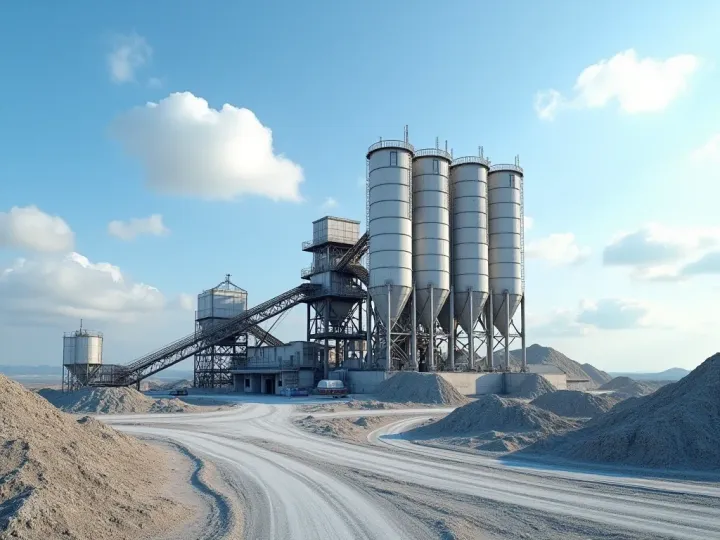
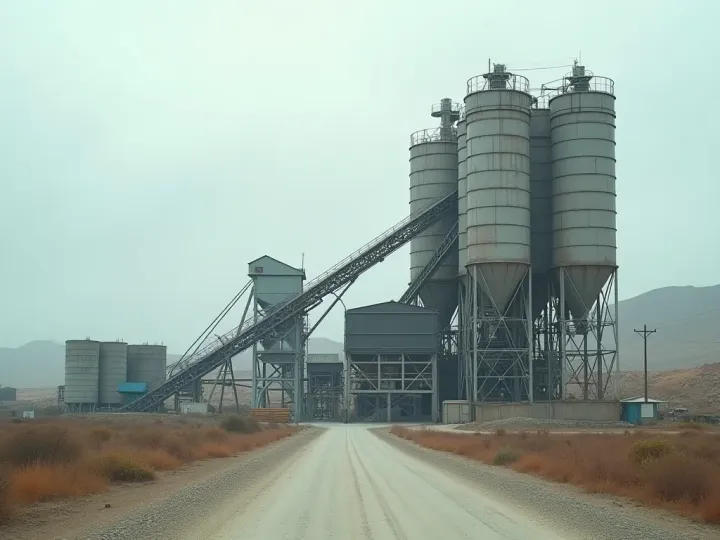
What this means for your batching plant
I've been watching the concrete industry shift toward digital precision for years. The gap between material science and batch control widens every month.
Most plants still rely on manual checks and static mix designs. If your concrete can report its own strength later, why is the production phase so blind to it?
There's a hidden cost to that disconnect. Skip tracking the exact input variables that affect final strength, and you're flying blind during production.
Operators at modern plants know that the difference between a basic unit and an intelligent one is often forty thousand dollars. But the savings from reduced waste usually cover it in months.
The sensor drift problem you might be ignoring
A plant in Texas lost a quarter million dollars last season because of one drifting sensor. The data looked fine on the dashboard but was completely wrong.
If your smart concrete is going to report real data, the equipment that creates it has to be equally accurate. Otherwise you're just collecting expensive noise.
Calibration drift is a silent killer in concrete production. It creeps in slowly and destroys your quality control metrics over time without anyone noticing.
You need to check your calibration schedules regularly if you want reliable output. Automated systems help, but they aren't magic.
The environmental angle nobody talks about
Concrete production is a massive carbon emitter. Smart concrete can actually shrink that footprint significantly over the life of the structure.
When you know exactly when concrete reaches peak strength, you can optimize the curing process. Less cement is needed to achieve the same durability.
That also means fewer repairs and less material waste. The environmental benefit compounds over decades of use on highways and bridges.
Who wins and who loses in this shift
The winners are obvious. State departments of transportation get better data and lower long term costs. Drivers spend less time stuck in traffic.
The losers are harder to see. It's the operators who refuse to adapt their workflows. Still relying on gut feeling and static recipes? You're falling behind.
I met a plant owner last winter who refused to trust the new software. He said it felt like losing control of his craft.
His competitors are already using data driven batch controls. They produce higher quality concrete with fewer errors and less waste.
You can check out this detailed case study on operator resistance to understand the human side of this technological shift better.
The next five years for intelligent infrastructure
We're moving toward roads that can prevent their own collapse. Sounds like science fiction, but it's already in testing phases.
As vehicles get smarter and heavier, the infrastructure underneath needs to keep up. Smart concrete is just the first step in that evolution.
The real question is whether your batching plant can keep pace with this material revolution. If not, you're producing yesterday's concrete for tomorrow's roads.
The technology is here. The data streams are flowing. Now the industry just needs to catch up and start listening to what the concrete is trying to tell us.