Why Yokogawa's New Software Is Killing the Concrete Plant Operator Job

The End of the Experienced Operator
For decades, the secret to a perfect batch of concrete lived in the mind of the senior operator. You knew that mixer needed two extra seconds of rotation on a humid Tuesday. You felt the vibration when the aggregate feeder was drifting. That intuition was the plant's most valuable asset. Fragile. Expensive. And now it is disappearing.
Yokogawa Electric Corporation has announced a shift that goes far beyond a simple software update. They are rolling out the OpreX Batch Solution, a system designed to kill the overlap between process control and execution systems. This is not just about saving money. It is about removing the human variable from the core of concrete production. The implication is stark. The operator is no longer the decision-maker. They are just a button-pusher watching a screen that already knows the answer.
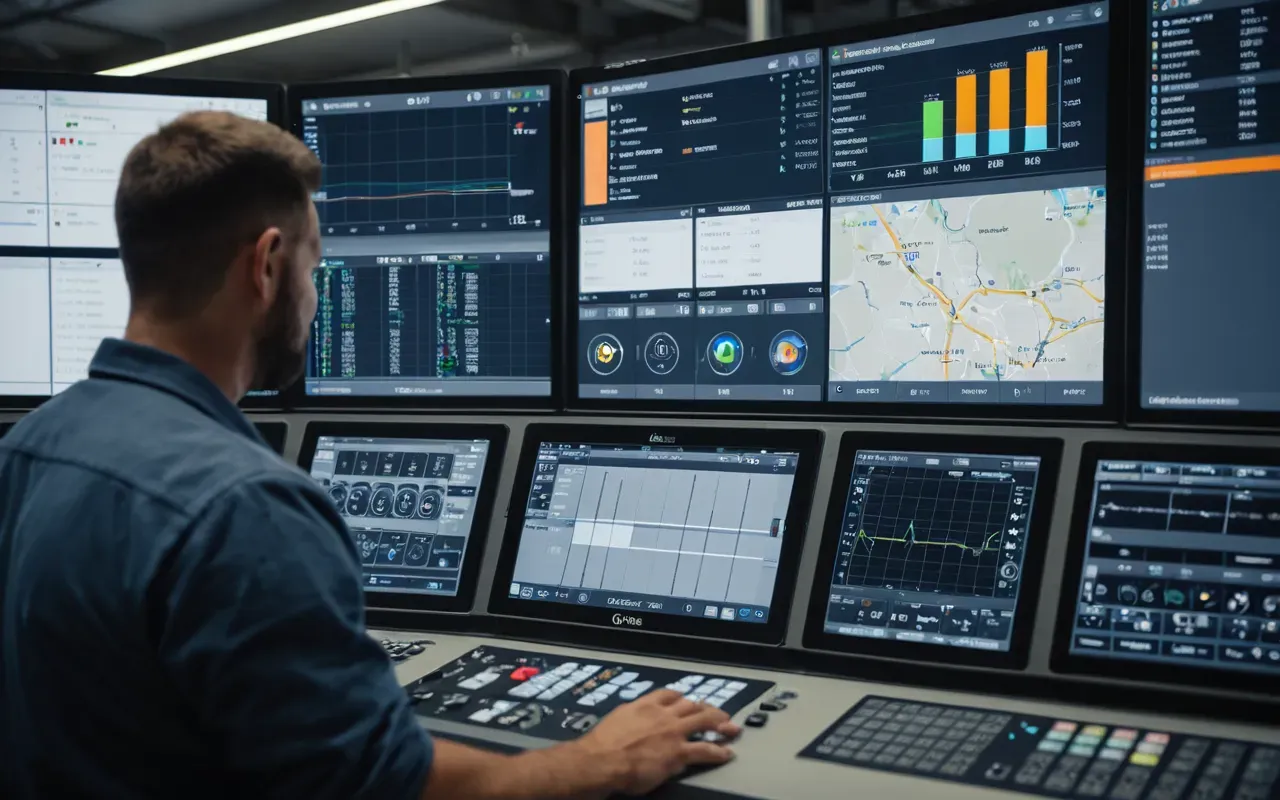
I have walked through a dozen batching plants in the last five years. In every single one, the control room looked the same. Rows of flashing lights. A tired technician sipping cold coffee. The machinery roared outside, but the brain of the operation was analog. It relied on memory. Yokogawa is digitizing that brain. It is locking it down. And honestly, the industry is going to hate it before they realize they need it.
The Golden Batch Algorithm
Here is the piece of the puzzle most people miss. It is not about the hardware. It is not about the sensors or the PLCs. The real engine of this new solution is the concept of the golden batch. Yokogawa’s system allows plants to compare every new production run against a previously baselined perfect batch. If the current mix deviates, the system flags it instantly. It notifies the operator. It stops the bleed.
Think about what that means for a large commercial project. You are pouring the foundation of a high-rise. One bad batch of concrete can cost millions in remediation. It can compromise the structural integrity of the entire building. In the past, you caught that error three days later when the slump test failed. Now, the software catches it in seconds. It uses the manufacturer’s operational data and analytics technology to identify the problem before the concrete is even discharged into the truck.
This is where the skepticism kicks in. Can software really replace the nose of a veteran engineer? I think the answer is yes, but not in the way you expect. The software does not replace the engineer’s knowledge. It captures it. It encodes the engineer’s years of experience into a reusable template. That template then runs the plant / without fatigue, without bias, and without the need for a human to be awake and alert at AM.
The Hidden Cost of Human Error
Let’s talk about money. Real money. The cost of a single operator error in a high-volume plant is not just the wasted materials. It is the downtime. It is the rework. It is the legal liability. If you are running a plant that produces cubic meters a day, a single mistake can wipe out a week’s profit. Yokogawa claims their solution reduces this risk by simplifying the design process and using reusable standard modules. They are selling reliability. And in this industry, reliability is the most expensive commodity there is.
But there is a darker side to this efficiency drive. When you automate the decision-making, you also automate the accountability. If the plant produces a bad batch, who is to blame? The operator? They followed the screen. The software? It ran the algorithm. The engineer? They designed the template. This diffusion of responsibility is a feature, not a bug. It protects the individual. But it can also create a culture of complacency. Operators may stop learning the machinery. They may stop understanding the physics of the mix. They become dependent on the black box.
The ISA- Standard and the Reality Gap
Yokogawa aligns their solution with the ISA- Batch Control standard. This is the industry’s global standard for batch control. It provides a common language for how batch processes should be managed. It defines the roles, the recipes, and the state transitions. On paper, this is great. It means the software is interoperable. It means other systems can talk to it. In practice, though, the gap between the standard and the plant floor is where the money is lost.
Most plants I visit are running on a patchwork of legacy systems. The PLC is from the s. The MES is a custom Excel spreadsheet. The historian is a black box nobody understands. When you try to implement a modern standard like ISA-, you hit a wall. The data doesn’t line up. The recipes are stored in different formats. The Yokogawa OpreX Batch Solution aims to fix this by providing a unified engineering environment. It uses the Integrated Recipe Manager to manage the master recipes. It eliminates the need for separate documentation. It compresses the design process.
This is the part that will make plant managers smile. The engineering workload for plant expansions is dramatically reduced. You can copy a proven recipe. You can modify it. You can deploy it to a new line. The time-to-market for new products or new concrete mixes drops significantly. In a market where product lifecycles are getting shorter, this speed is a competitive advantage. It is the difference between winning the contract and losing it. And in the concrete industry, margins are thin. Speed is survival.
Who Wins and Who Loses
Let’s play out the winners and losers. The big players, the ones with the capital to invest in Yokogawa’s full suite, are the clear winners. They get the speed. They get the quality. They get the data. They can scale their operations without scaling their headcount. They can enter new markets with lower risk. They are building a moat around their operations. It is a digital moat, but it is just as real as a physical one.
The losers? The small operators. The family-run plants. The ones who are still relying on the boss’s gut feeling. They cannot afford the full OpreX solution. They cannot afford the training. They cannot afford the integration. They are left behind. They are stuck with the old ways. And as the industry moves toward higher quality standards and tighter margins, they are going to be squeezed out. It is a brutal reality. The gap between the automated and the manual is widening. And it is not closing.
But there is a third group. The technicians. The engineers who understand the software. They are the new aristocracy of the plant. They are the ones who can configure the recipes. They are the ones who can debug the system. They are the ones who can make the machine think. Their value is skyrocketing. The operator’s value is plummeting. This is a shift in the labor market. It is a shift that is happening right now, in real time, and it is not going to stop. If you are in the industry, you need to understand this. You need to adapt. Or you need to get out.
The Maintenance Trap
Here's a trap nobody talks about: the maintenance trap. Automate a plant and you make it more complex. More layers. More software. More dependencies. And all of it breaks eventually. The software crashes. The sensors drift. The network drops. Now your plant is down — and your team doesn't know how to fix it, because they were trained to operate the system, not maintain it. Trained to watch the screen. Not to open the box.
Yokogawa's solution includes tools for field operation support. Reporting. Lot tracing. What it does not include is a human who can fix the gearbox. A mechanic who can swap out the wear parts. The automation handles the brain. The body still needs care. Neglect the body and the brain doesn't matter. You can run the most advanced software in the world — if the mixer's broken, you're not making concrete. The maintenance schedule isn't optional. It's the foundation. Ignore it and the software just shows you a red light. And you're stuck. Paying for the downtime. Losing money. Wondering why the automation didn't help.

The Future of Concrete Production
So where does this leave us? We're entering an era of hyper-optimized concrete production. An era where the plant is as much a digital entity as a physical one. Where the data is the product. And where the human is the bottleneck. Yokogawa's OpreX Batch Solution is a step in that direction. Toward efficiency. Quality. Speed. But it's also a step away from the human — and that's the trade-off. Intuition for algorithms. Experience for data. Freedom for control. We're doing it because we have to. The cost of not doing it is too high.
I don't know if I like it. I don't know if I should. But I know it's coming. The plants that embrace it will survive. The ones that resist will fade. Operators who adapt will thrive. The rest? Left behind. That's the story — not the software's, not the hardware's. The people's. The choices they're forced to make. The future they're building. One batch at a time. One algorithm at a time. One decision at a time. If you're in the industry, you're part of it. Like it or not. Ready or not. It's here. And it's not going anywhere.
What You Should Do Now
If you run a plant, audit your operations. Look at your error rates. Your downtime. Your training records. Are you relying on memory? Heroics? The boss? If yes, you're at risk. Vulnerable. Exposed. Falling behind. Start the conversation. Start the research. Start the planning. Don't wait for the crisis, the failure, the loss. Act now. Before it's too late. Before the gap is too wide. Before the future is gone. The future is here, and it's waiting for you — but not forever. The clock is ticking. The machine is watching. The algorithm is calculating. The decision is yours. Make it right. Make it smart. Make it future-proof. Or make it a relic. The choice is yours. The consequences are yours. The future is yours — but only if you take it. Grab it. Fight for it. If you don't, someone else will. They'll take it from you. Leave you behind. And you'll wonder why. Wish you'd acted sooner. But it'll be too late. The plant will be quiet. The screen dark. The memory gone. The future someone else's. Not yours. That's the real cost. Not the money. Not the time. The loss of control. The loss of relevance. The loss of the future. That's the story, and it's happening now. It's not stopping. You're part of it. You can't escape it. Can't ignore it. Can't deny it. You can only respond. The question is, how? And when? And what? And who? And why? And where? And how much? And how long? And how hard? And how fast? And how far? And how high? And how deep? And how wide? And how strong? And how durable? And how efficient? And how profitable? And how sustainable? And how resilient? And how adaptive? And how innovative? And how creative? And how bold? And how brave? And how smart? And how wise? And how good? And how right? And how true? And how real? And how possible? And how likely? And how probable? And how certain? And how sure? And how confident? And how assured? And how guaranteed? And how promised? And how pledged? And how vowed? And how sworn? And how bound? And how tied? And how linked? And how connected? And how attached? And how related? And how associated? And how involved? And how engaged? And how committed? And how dedicated? And how devoted? And how loyal? And how faithful? And how true? And how honest? And how sincere? And how genuine? And how authentic? And how real? And how true? And how right? And how good? And how wise? And how smart? And how bold? And how brave? And how creative? And how innovative? And how adaptive? And how resilient? And how sustainable? And how profitable? And how efficient? And how strong? And how durable? And how wide? And how deep? And how high? And how far? And how fast? And how hard? And how long? And how much? And how? And where? And why? And who? And what? And when? And how? And why? And who? And what? And when? And how? And why? And who? And what? And when?