The empty cab is actually making your jobsite more dangerous
The cab is empty but the danger has not left
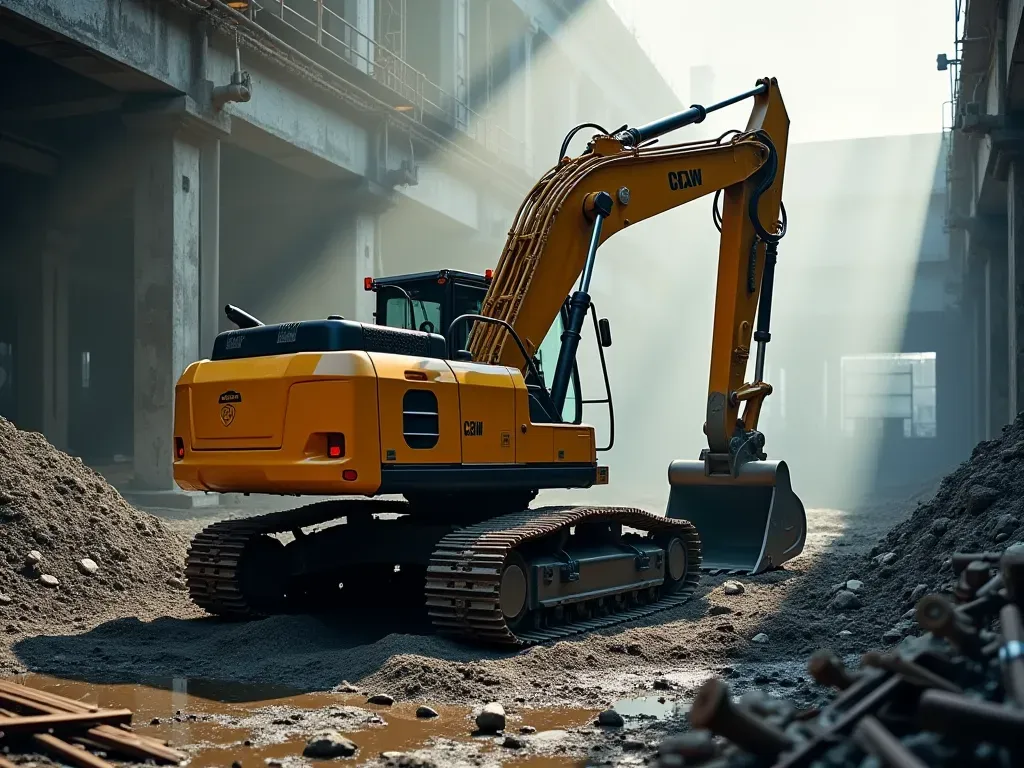
A modern jobsite looks like something out of a dream — or a nightmare, depending on your seat. A massive yellow excavator cuts a trench, and the cab is empty. No hands on levers. No eyes scanning for pedestrians.
This isn't a movie prop. It's real hardware rolling off assembly lines right now. Bedrock has raised over $ million to build these machines.
And here's the part that keeps me up at night. The machine has no operator, but you are still there.
We've spent decades training crews to watch for blind spots. Taught them to look for a human making mistakes, or getting tired.
But an algorithm doesn't get tired. And it doesn't hesitate when you step into its path if it has already committed to a trajectory.
Silicon Valley Bank reports that venture capital poured $. billion into construction tech in alone.
Half of that money went straight into heavy earthmovers like the ones Bedrock is making.
The complacency trap nobody sees coming
I've watched crews adapt to new technology before. They get comfortable fast.
You watch the excavator dig the same perfect trench for three hours. No errors.
Then a truck driver pulls into the zone unexpectedly. The human brain starts to relax because nothing bad has happened yet.
That's where the danger lives. Not in the machine failing — in us believing it won't.
Curious how similar automation changes control panels in other industries? Check out this analysis on operator absence.
Why the four-step prep model fails in real weather
The standard advice is to run a site-specific risk assessment. Sounds logical.
But jobsites aren't static labs. They shift every hour as contractors arrive and leave.
A clear area at AM can be a chaotic mess by AM when the concrete trucks start arriving.
The autonomous machine doesn't care that a new subcontractor just walked into the exclusion zone.
Training for scenarios that never happen in drills
Most training covers how to turn the machine on and off. Useless when things go wrong.
We need to practice communication failures. We need to simulate a sensor blockage in the rain.
Want to see how software automation handles similar edge cases in batching plants? Read this piece on self-correcting systems.
Competency isn't just signing a sheet. It's knowing when to hit the emergency stop.
The hidden cost of relying on contractor data alone
Leaders love to look at safety performance scores before deploying new tech.
But a high score from last year says nothing about how their crew reacts to an autonomous excavator today.
We're treating dynamic human behavior like a static variable. It is not.
Who actually owns the stop work authority now
If a machine is moving and someone looks about to get hit, who presses the button?
The operator is gone. The supervisor might be fifty feet away.
That gap creates a terrifying moment of hesitation — right where seconds matter most.
What this means for your equipment purchase decisions
Buying an autonomous unit isn't just a tech upgrade. It's a total safety protocol overhaul.
Considering new heavy iron soon? Understand that the software is as important as the steel.
You might be facing similar complexity with your current fleet. Check this article on purchase complications for more details.
The bottom line is simple. Autonomy removes one variable but adds three new ones.
The real shift in how we think about safety culture
We used to define safety by keeping humans away from danger.
Now we have to define it as managing the interaction between humans and algorithms.
Harder problem to solve. But it has to be solved before someone gets hurt.
The technology is here. The empty cab is the new normal for many sites.
Are you ready to manage it? Or are you just hoping the machine knows best?